Storm-Damaged Tree Service
What to do about a tree damaged by wind, rain, or impact after a storm has passed.
San Diego County tree-risk assessment and removal guidance — know what you are looking at before anyone brings out a chainsaw.
TreeRisk ExpertsThis page covers emergency tree removal in San Diego for a situation that cannot reasonably wait for scheduled service — something has come down, or is visibly in the process of coming down. Read the safety notes first, then describe the situation and we will help connect you with an available provider. This site does not operate a phone line and does not guarantee any response time.
Describe the situation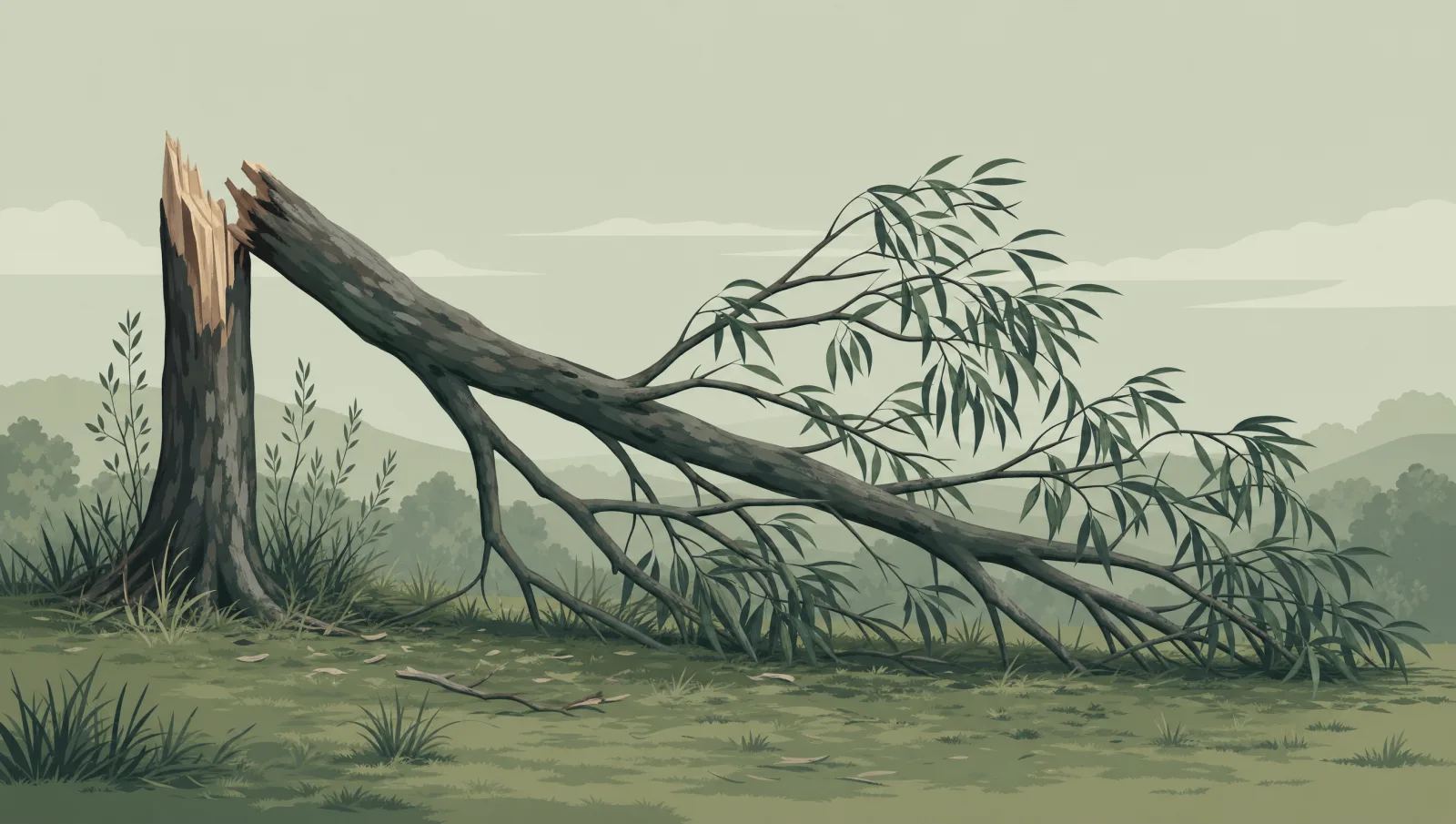
A tree already on the ground is usually more straightforward to remove than one that is still standing and needs to be brought down under control.
A tree resting on a structure, fence, or line requires more careful handling than one that fell clear, which affects both time and method.
If the downed material is blocking the access a crew would normally use, clearing a path can be its own step before the removal even starts.
Waiting on a utility company to clear a line is outside a provider's control and can affect both timing and the overall cost of the job.
This site does not control or guarantee provider availability — how quickly someone can respond depends on the independent provider you are connected with, not on this site.
A downed tree can itself block the access a crew would normally use — a driveway obstruction or a fence-line failure sometimes has to be worked around rather than through, which affects how quickly equipment can actually reach the tree.
Any contact between the tree and a power line typically requires the utility company to de-energize or otherwise clear the line before tree work can safely begin near it — this is outside a tree crew's control and can add real time to the process.
A tree or limb resting on a roof or other structure sometimes needs the load addressed carefully rather than simply cut free, since removing support suddenly can cause further movement or damage.
Permit requirements for tree removal do not disappear because a situation is urgent, though several San Diego County cities have separate provisions for hazardous or already-failed trees — this is confirmed as part of the assessment, not assumed either way.
Santa Ana wind events are the most common trigger for sudden tree failure across the county, and they tend to affect canyon-adjacent and exposed hillside properties disproportionately — the same wind that barely moves a tree on a sheltered inland lot can bring down a limb or an entire tree on a more exposed site. Access can also complicate an urgent removal in ways it would not for a planned one: a canyon-edge property with a single narrow access point can turn a downed tree blocking that access into its own separate problem to solve before the removal itself can start.
Across San Diego County, including these areas — provider availability for urgent requests varies by location and is never guaranteed.
No. This site does not operate a phone line and does not promise 24/7 availability, immediate dispatch, or any guaranteed response time. Submitting the form is reviewed and, where possible, shared with an independent provider who may be able to help — but availability depends entirely on that provider, not on this site.
Stay well away from the tree, the limb, and the line, and contact the utility company or 911 directly — this is an immediate safety issue that falls outside what a tree removal request through this site addresses. Once the line situation is resolved, this site can help you get the tree work itself assessed.
No. A limb that is not resting cleanly, or a tree under tension from a partial fall, can move unpredictably when disturbed. Keep the area clear and let an assessment determine the right approach rather than attempting to cut, climb, or move it yourself.
Hazardous tree removal covers a documented risk indicator found during an inspection — a real concern, but not necessarily something that needs attention today. Storm damage tree service covers damage specifically caused by wind, rain, or impact, which may or may not be urgent. This page is specifically for a tree or limb that has already failed, is actively failing, or poses an obvious immediate danger right now.
Not from this site — pricing is set by the independent provider you are connected with based on what they find on site. What affects the cost is covered above, but no dollar figure is quoted here or guaranteed by this site.
What came down or is failing, roughly where on the property, what it is resting on or blocking, and whether anything is near a power line. Keep people and pets clear of the area while you fill this out.
Request ServicePrefer to call? (619) 853-5977