Brush clearing in San Diego County, assessed by the area

Overgrown brush, dead undergrowth, or a lot that has not been maintained in a while — brush clearing deals with vegetation across an area, not a single tree. Describe the property and what needs to be cleared and we will help you get that assessed.

Describe the property
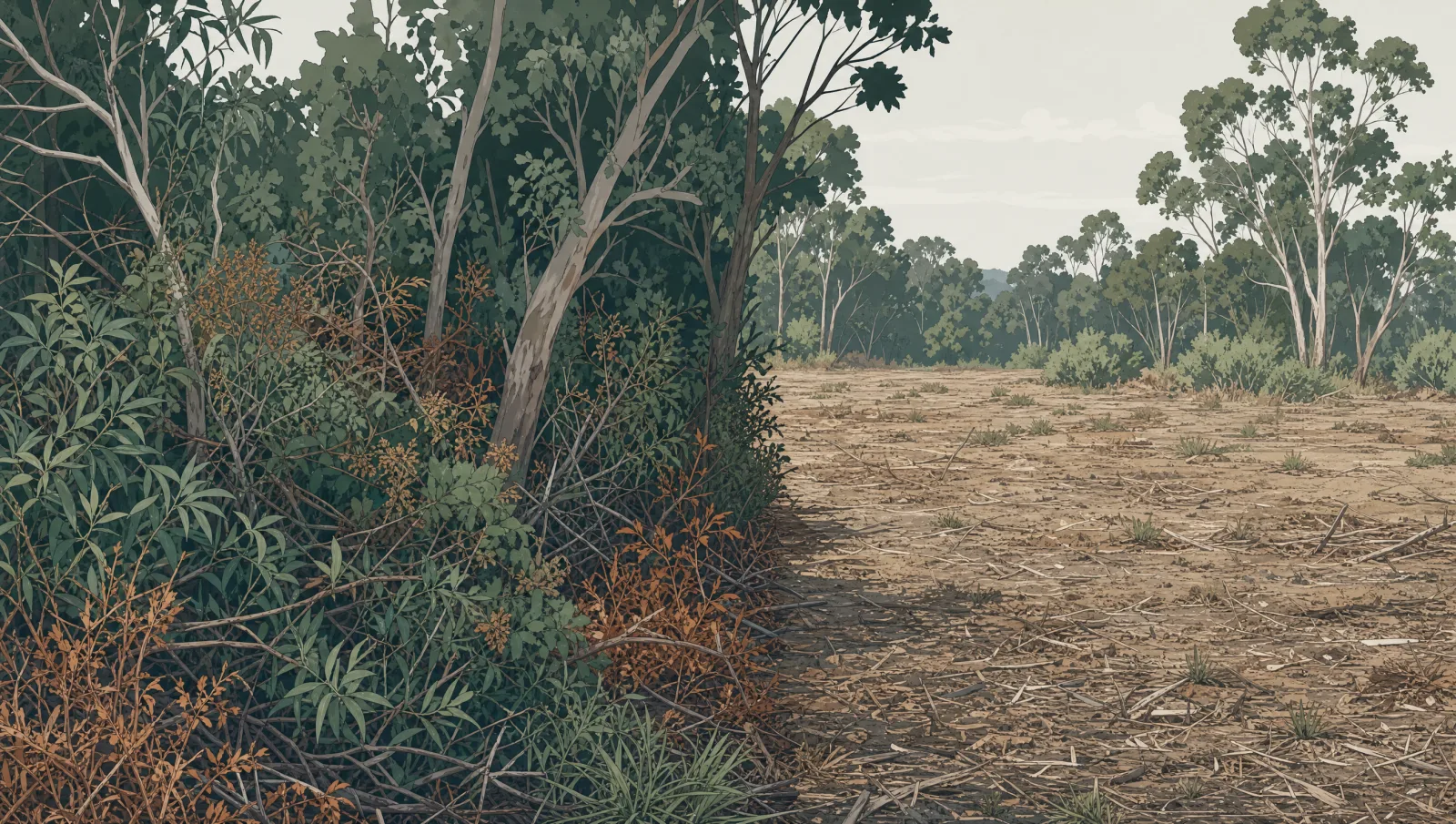
Illustration contrasting a dense overgrown brush thicket with an adjacent cleared open ground area.

Reasons people usually arrive at this page

  • A lot or hillside has gone unmaintained and brush has taken overA property that has not been actively managed for a season or more can build up dense brush and dead undergrowth quickly, especially on slopes and canyon-adjacent lots where growth is harder to keep in check.
  • Dense vegetation is blocking access for other planned workFencing, grading, construction, or even routine tree work sometimes cannot proceed until the brush and undergrowth in the way is cleared, which makes this a preliminary step for a larger project rather than the end goal itself.
  • Dead undergrowth has built up beneath trees or along a property lineDry, dead brush accumulating under a canopy or along a fence line is a maintenance issue in its own right — it can also be a factor in general vegetation management around structures, though what is appropriate depends on the property and local guidance.
  • A property owner wants to establish or maintain defensible space around a structureVegetation management near structures is a real and common reason to clear brush, but specific distance and clearance requirements vary by jurisdiction and property — Cal Fire and the local fire authority are the right source to confirm what applies to a given address, not a general rule of thumb.

What a site assessment looks at before clearing

  1. Walk the area and identify what is actually thereBrush density, vegetation type, and how much of it is dead versus live growth all affect both the approach and the amount of labor involved — a site visit is what actually establishes the scope, not a rough estimate from a description alone.
  2. Note terrain and slopeFlat, open ground clears differently than a steep hillside or canyon edge — slope affects equipment access, crew safety, and how debris gets moved off the site.
  3. Identify anything that should stayBrush clearing is not the same as clear-cutting — established trees, landscaping meant to remain, and any protected or sensitive vegetation get flagged before work starts so clearing does not remove more than intended.
  4. Plan debris handlingChipping on-site, hauling off, or a combination depends on volume, access for equipment, and whether the property has room to stage material during the work.

What "brush clearing" can involve

Selective clearing

Fits when: Removing dead undergrowth, invasive growth, or overgrown brush while leaving established trees and desired landscaping in place.

Trade-off: More labor per area than a full clear because crews are working around what stays, which affects time and cost.

Full-area clearing

Fits when: A neglected lot, a construction-access need, or a section of property being cleared down to bare or near-bare ground.

Trade-off: Faster per area cleared than selective work, but removes everything in the footprint — worth confirming property lines and what should be preserved before starting.

Mechanical (mastication) clearing

Fits when: Larger areas of dense brush where a masticating attachment can grind vegetation in place rather than cutting and hauling it.

Trade-off: Efficient for volume but requires equipment access wide and stable enough for the machinery, which limits it on tight or steep sites.
Access and site considerations

Site access for equipment

Gate widths, slope, and how close a truck, chipper, or masticator can get to the work area shape which clearing method is realistic for a given property.

Slope and terrain

Steep or uneven ground changes both the equipment that can be used safely and how debris is moved off the site, and it is one of the bigger cost drivers on hillside and canyon-adjacent lots.

Property line and boundary confirmation

Clearing near a shared fence line or an adjacent lot benefits from confirming the boundary ahead of time, particularly on unmaintained properties where the line is not obvious on the ground.

Vegetation management guidance

For clearing intended to support defensible space around a structure, requirements vary by jurisdiction and property — checking directly with Cal Fire or the local fire authority is the reliable way to confirm what applies, rather than assuming a general standard.

What actually affects the cost of brush clearing

Density of the vegetation

Thick, overgrown brush takes meaningfully longer to clear per square foot than sparse or lightly overgrown ground.

Total area

Cost scales with the size of the area being cleared, though larger contiguous areas are sometimes more efficient per square foot than several small, scattered ones.

Terrain and slope

Steep or uneven ground slows the work and can rule out certain equipment, pushing toward slower, more manual clearing methods.

Debris disposal method

On-site chipping versus hauling material off the property changes both the equipment needed and the time involved, and is often priced differently.

How much needs to be preserved

Selective clearing around trees and landscaping that stay in place takes more time per area than a full clear-down.

Timing and what to prepare

  1. Site assessment and quoteA walk of the area to gauge density, terrain, and access, usually the fastest step to schedule.
  2. Confirm what stays and what goesMarking trees, landscaping, or boundary features to preserve before crews start, so clearing does not remove more than intended.
  3. Clear access for equipmentMoving vehicles, gates, or anything blocking the planned access path ahead of the scheduled date.
  4. The clearing itselfDuration depends heavily on area, density, and terrain — a small, open lot can clear in under a day; a large, dense, or steep area can take several days.
  5. Debris removal or chippingConfirm ahead of time whether hauling or on-site chipping is included in the quote versus billed separately.

What is specific to San Diego County brush clearing

The county's canyon and hillside terrain means a lot of properties accumulate brush faster than flatter inland lots, particularly where a slope backs up to open space or an undeveloped canyon. That same terrain is often what makes access the hardest part of the job rather than the vegetation itself — a steep, brush-choked hillside can take real equipment planning even when the area is not especially large. Vegetation management expectations around structures also vary city by city and by proximity to open space, so a property near a canyon edge is worth checking against current local fire authority guidance rather than assuming what applied elsewhere.

Where we help with brush clearing

Across San Diego County, including these areas with their own local considerations.

    Questions people ask

    How is brush clearing different from tree removal?

    Tree removal takes down a single tree. Brush clearing addresses vegetation across an area — overgrown brush, dead undergrowth, and dense growth — and does not necessarily involve removing any established trees. The two are sometimes done together on a property, but they are assessed and priced separately.

    Do I need a permit to clear brush on my property?

    It depends on the property, the amount of vegetation involved, and the city. Some areas have restrictions on clearing near slopes, canyons, or environmentally sensitive land. Checking with the specific city or county before scheduling large-scale clearing is worth the extra step.

    Will clearing brush around my house meet defensible-space requirements?

    That depends entirely on the jurisdiction and the specific property, and it is not something to assume from general information. Cal Fire and the local fire authority are the correct source for what clearance is actually required at a given address — confirm directly with them rather than relying on a general rule of thumb.

    What happens to the cleared brush and debris?

    It depends on the job — some clearing is chipped on-site, some is hauled off the property. Confirm which applies, and whether it is included in the quote or billed separately, before work starts.

    How long does clearing a brushy lot usually take?

    It varies widely with area, density, and terrain — a small, open lot can be cleared in under a day, while a large, dense, or steep area can take several days.

    Is brush clearing guaranteed to be scheduled quickly once I request it?

    No — availability depends on the independent provider you are connected with, and this site does not guarantee response times or acceptance of any project. See the contractor matching disclosure for what submitting the form does and does not promise.

    Tell us about the property

    Roughly how much area needs clearing, what kind of vegetation is involved, and why — a neglected lot, access for other work, or general vegetation management.

    Request Service