Tree Removal
Planned removal of a tree that is dead, unwanted, or in the way of other work.
San Diego County tree-risk assessment and removal guidance — know what you are looking at before anyone brings out a chainsaw.
TreeRisk ExpertsA tree is already gone and what is left is a stump — maybe with roots pushing up nearby. Describe what is on the property and we will help you figure out what dealing with it actually involves.
Describe the stump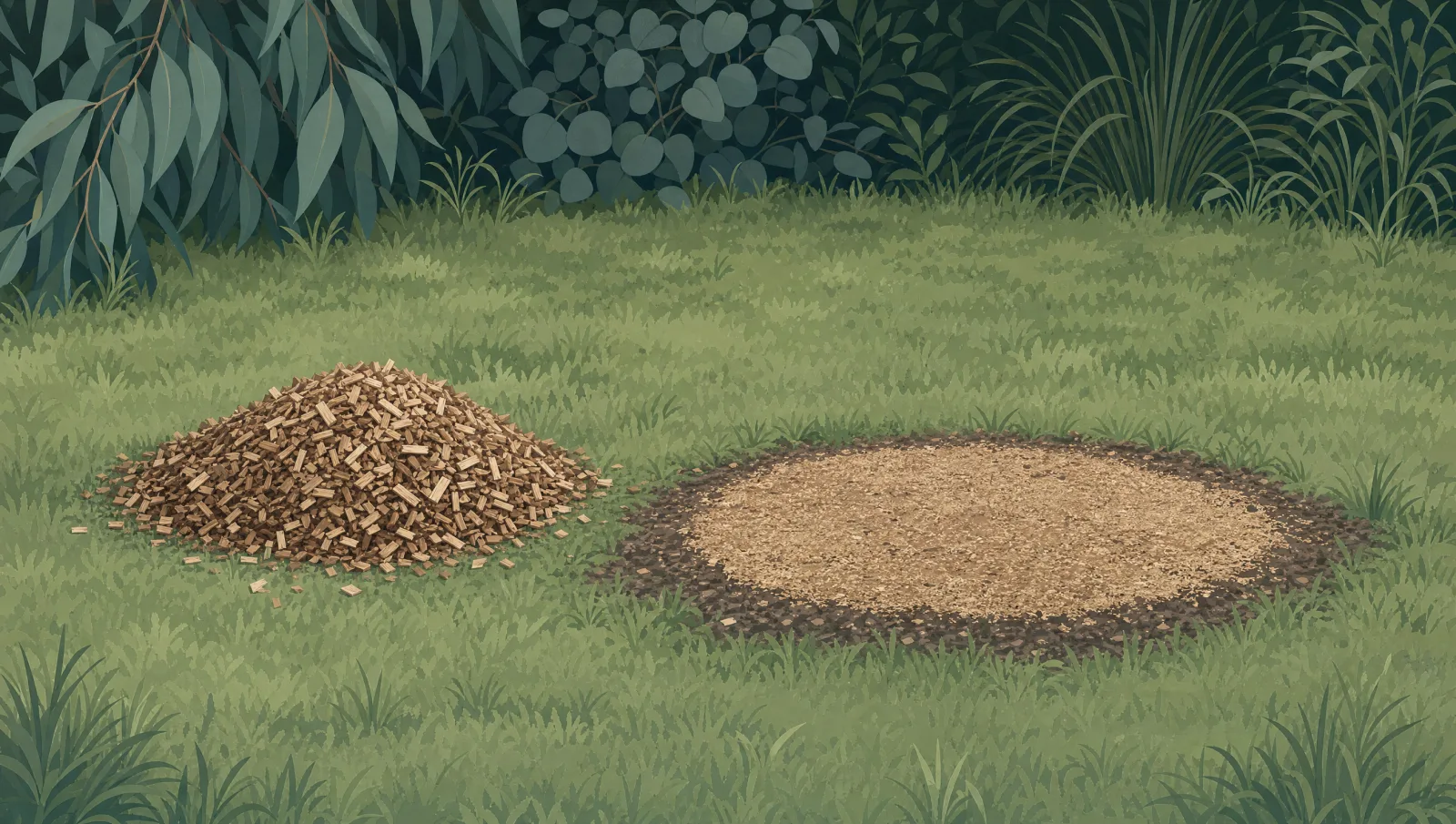
| Stump grinding | Stump & root removal | |
|---|---|---|
| What it leaves behind | Wood chips and ground debris on top; the root system stays in the soil and decays over time. | The stump and much of the root ball are physically excavated and hauled off, leaving a hole to backfill. |
| Typical cost and disruption | Generally faster, less invasive, and less disruptive to the surrounding yard. | More labor- and equipment-intensive, and can disturb more of the surrounding soil, turf, or hardscape. |
| When it fits | Good enough when the goal is a level, usable surface — lawn, mulch bed, walkway clearance. | Needed when a project requires the ground genuinely clear of roots, such as new construction or deep planting. |
A wider stump takes longer to grind down to the target depth and involves more material.
A stump with roots radiating well beyond the visible trunk may need a wider grinding pass to address surface roots as well as the stump itself.
A stump reachable by equipment straight from a driveway or gate is quicker to grind than one behind a narrow gate or down a slope, which may need smaller or hand-carried equipment.
Multiple stumps on one property are often priced with some efficiency over doing each as a separate visit, but each still adds time.
Hauling the ground material away is typically an added cost over leaving it on site as mulch or fill.
Established landscaping and mature trees across much of the county mean a fair number of stump jobs come from a tree that was removed well before the current owner had the stump addressed — decades-old stumps with extensive root systems are common. Sloped and canyon-adjacent lots can also limit which grinding equipment fits, which is worth flagging when describing the site.
Across San Diego County, including these areas with their own local considerations.
It grinds the visible stump down below the surface, generally enough for turf or mulch over it, but the deeper root system stays in the ground and decays naturally over time. If a project needs the roots fully out, that is full stump removal instead — see our stump grinding vs. stump removal guide for the difference.
Usually, because grinding removes the crown the sprouts come from. Some vigorous species can still send up shoots from roots further out that grinding does not reach, in which case those get dealt with separately as they appear.
Often yes for turf or shallow planting once the area is backfilled, but decaying root material below the surface can affect what grows well there for a while. For anything that needs a genuinely clear root zone, full removal is the better fit.
That depends on what is arranged for the job — they can be hauled away, left on site as mulch, or used to help fill the depression left by the stump. Confirm which before the work starts so there is no surprise pile left behind.
No — availability depends on the independent provider you are connected with, and this site does not guarantee response times or acceptance of any project. See the contractor matching disclosure for what submitting the form does and does not promise.
Roughly how big it is, where it sits on the property, and what you eventually want to do with that spot — lawn, planting bed, or something else.
Request ServicePrefer to call? (619) 853-5977