Tree inspection in San Diego County, documented and specific

A tree looks fine, or it doesn't — either way, a documented assessment is what turns a guess into a record: what was checked, what was found, and what it means. Describe the tree and what prompted the question, and we'll help you get that documented.

Request an inspection
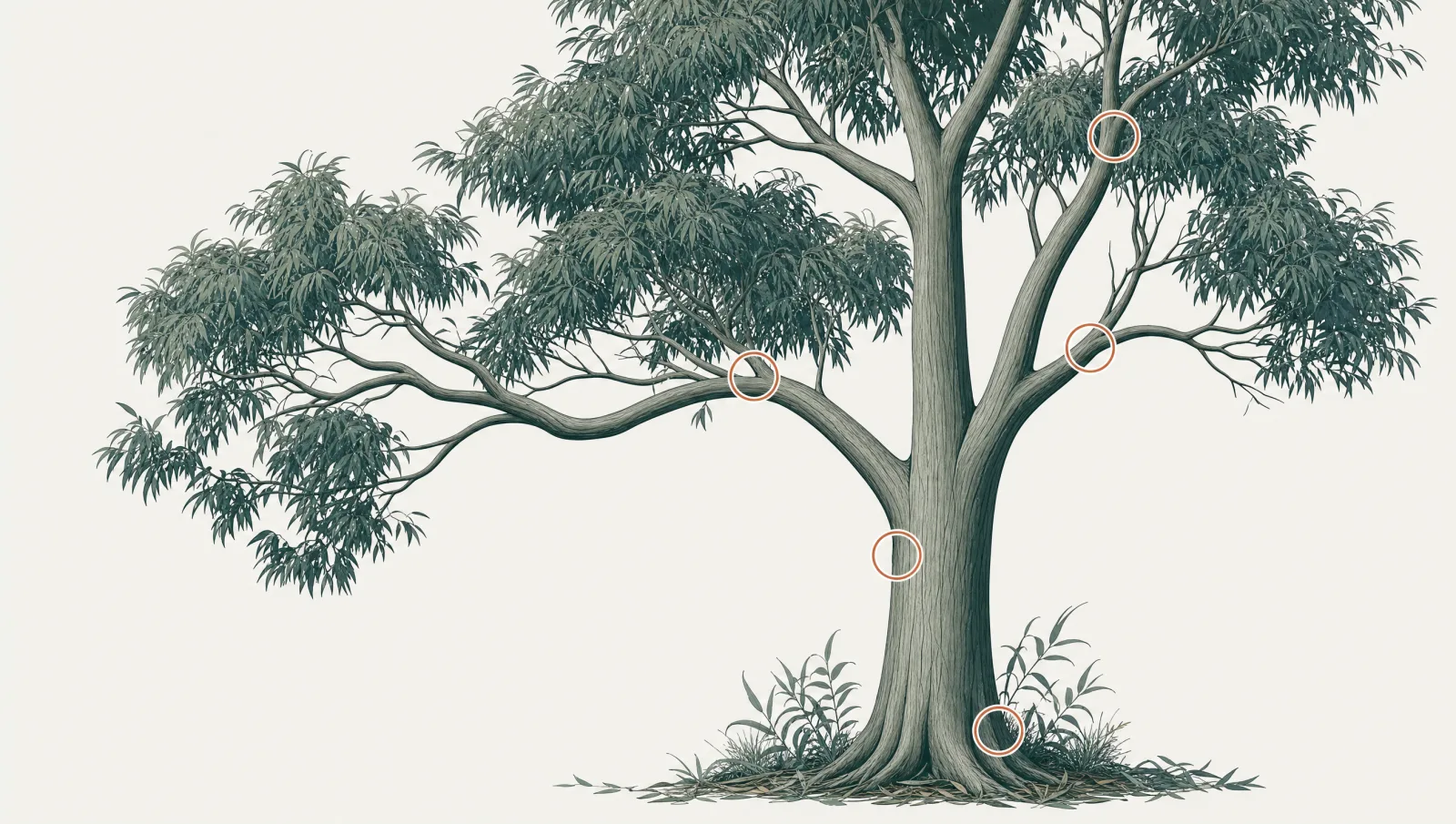
Illustration of a tree canopy and trunk with small markers highlighting points examined during a visual assessment.

Reasons people usually arrive at this page

  • A real-estate transaction requires a documented tree condition reportBuyers, sellers, lenders, and insurers sometimes want a written record of a tree's condition before closing — particularly for large or mature trees near the structure. A formal inspection produces that record.
  • The tree is showing a visible warning sign — leaning, cracking bark, dead limbs, fungal growth, or thinning canopyAny one of these can mean very different things depending on the species, the tree's history, and what else is going on with it. An inspection documents exactly what is visible and what it typically indicates, rather than guessing from a symptom alone.
  • The tree is older, large, or sits near a structure, driveway, or place people regularly areSize and proximity raise the stakes of getting the assessment right, even when nothing looks obviously wrong. Periodic inspection is how a property owner gets ahead of a problem instead of reacting to one.
  • A prior contractor or neighbor raised a concern, and you want an independent documented opinionA written assessment gives you something specific to act on — or to set aside — instead of an informal comment with no record behind it.

What a formal inspection actually documents

  1. Visual survey of the trunkChecking for cracks, cavities, included bark, lean, wounds, and visible decay or fungal growth at the base and along the trunk — recorded with notes and, typically, photographs.
  2. Canopy conditionLooking at deadwood, thinning, dieback pattern, and any structural issues in major limbs — signs that can indicate root or vascular problems well before the whole tree looks unhealthy.
  3. Root zone and baseVisible root flare condition, soil heaving, fungal conks near the base, and any recent grade or construction changes nearby that could have disturbed the root system.
  4. Site and target factorsWhat is near the tree — structures, driveways, parking, walkways, power lines — because the same defect carries different consequences depending on what is close enough to be affected.
  5. Written findings and recommendationThe inspection produces a documented summary of what was observed and a recommended next step — monitor, prune, further evaluation, or removal — rather than a verbal impression with nothing behind it.

Where inspection findings typically lead

Monitor

Fits when: No significant defect found, or a minor one that is not currently a concern given the tree's size, species, and surroundings.

Trade-off: Lowest cost and no work required now, but it means checking back on a schedule rather than treating the question as closed permanently.

Pruning or further evaluation

Fits when: A specific, correctable issue was found — deadwood, a structural weak point, or a defect that needs a closer look, such as a resistograph or sonic tomography reading, before a firm call can be made.

Trade-off: Addresses the identified issue without removing a tree that may not need to come down, but sometimes means a second visit or a specialist referral before the picture is complete.

Removal recommended

Fits when: The inspection finds a defect serious enough, combined with what is nearby, that the documented recommendation is removal rather than management.

Trade-off: This page does not perform removal — it documents whether removal is the right call. See our tree removal page for what happens next if that is the finding.
What to have ready and what qualifications to expect

Site access

Clear access to the trunk base and, where possible, an unobstructed view of the canopy from multiple angles makes for a more thorough visual assessment.

Any history you have

Recent construction, grading, irrigation changes, storm damage, or prior pruning near the tree are all useful context — mention anything relevant when you describe the tree.

Credentials, confirmed directly

Arborist credentials such as ISA Certification are issued to individuals, not companies, and levels vary. Ask the provider you're connected with directly about their specific qualifications and confirm current certification status yourself before relying on it for a transaction or legal purpose.

Written documentation

A formal inspection should leave you with something in writing — what was checked, what was found, and the recommendation — not just a conversation on-site.

What actually affects the cost of an inspection

Number of trees being assessed

A single-tree inspection is a different scope than a multi-tree survey of a whole property.

Depth of assessment needed

A straightforward visual survey costs less than an inspection that requires advanced diagnostic tools, such as resistograph testing or sonic tomography, to evaluate internal decay.

Whether a written report is required

A formal written report — often needed for real-estate, insurance, or legal purposes — typically takes more time to prepare than a verbal on-site assessment.

Tree size and accessibility

A large tree with a canopy that is hard to view fully, or a root zone that is partly obscured, can take longer to assess thoroughly.

Urgency and turnaround

A report needed quickly for a closing deadline or other time-sensitive purpose can affect scheduling and cost differently than a routine periodic check.

What to expect and how to prepare

  1. Describe the tree and the reason for the inspectionWhat prompted the question — a visible sign, a transaction deadline, or routine risk management — helps determine the right scope.
  2. SchedulingAvailability depends on the independent provider you are connected with; this site does not guarantee any specific turnaround time.
  3. On-site assessmentThe visual survey of trunk, canopy, and root zone, plus any additional testing the situation calls for.
  4. Written findingsA documented summary of what was observed and the recommendation, typically delivered after the site visit rather than only stated verbally.
  5. Next step, if anyDepending on the finding, that may mean scheduling pruning or removal, or simply keeping the report on file and rechecking on a future schedule.

What is specific to San Diego County inspections

The county's mix of coastal, canyon, and inland conditions affects what an inspection commonly finds — root disturbance from slope grading, drought stress in inland areas, and salt or wind exposure near the coast all show up differently in a visual assessment. Older, established neighborhoods with mature trees planted close to older foundations are a common reason property owners request an inspection specifically ahead of a sale or renovation. Real-estate transactions in the county frequently move on tight timelines, which is worth mentioning up front if a report is needed by a specific date.

Where we help with tree inspection

Across San Diego County, including these areas with their own local considerations.

    Questions people ask

    Is a tree inspection the same as an arborist consultation?

    They overlap but are not identical. This page covers the specific process of a documented visual assessment of a tree's condition — trunk, canopy, and root zone — and the written findings it produces. A broader arborist consultation can cover ongoing care planning beyond a single assessment; see our arborist services page for that.

    Will the inspection tell me for certain whether the tree needs to come down?

    It will give you a documented recommendation based on what was visible and, if needed, additional testing — but a visual assessment has limits. Internal decay that is not yet visible externally can sometimes require further diagnostic testing to fully evaluate. The report will be specific about what was and wasn't assessed.

    Do I need an ISA Certified Arborist for a real-estate or insurance-related report?

    Requirements vary by transaction, lender, and insurer, so check what is specifically required before scheduling. Certification levels and status vary by individual, not by company — ask the provider you're connected with about their specific qualifications and confirm current certification status directly rather than assuming.

    How soon can an inspection happen?

    Turnaround depends on the independent provider you are connected with, and this site does not guarantee any specific response time or scheduling window. If you have a deadline — a closing date, for example — mention it when you describe what you need.

    What if the inspection finds nothing wrong?

    That is a legitimate and useful outcome — a documented "no significant defect found" is exactly what some transactions and insurance situations require, and it gives you a dated record to reference later if the tree's condition changes.

    Tell us about the tree and why you need it assessed

    What prompted the question — a visible sign, a real-estate deadline, or routine risk management — and roughly where the tree sits on the property.

    Request Service